

The model in the search menu
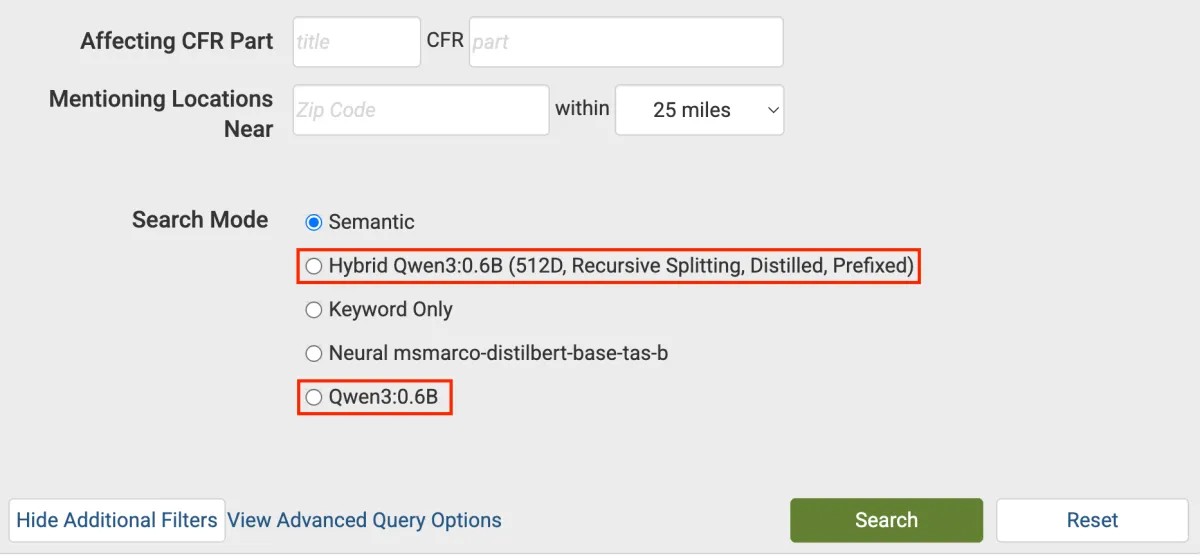
A product portfolio manager from Switzerland posted a screenshot of the Federal Register search interface. Its “search mode” setting selected semantic search by default, but the menu also offered two options named Qwen3:0.6B.
Qwen3:0.6B is a large language model developed by Alibaba Cloud. The two entries were described as:
Qweb3:0.6B, with roughly half a billion parametersA user responding to the post said that even the US government could not afford the token prices charged by American AI companies.
Both Qwen options disappeared from the Federal Register interface slightly more than 24 hours after the post began spreading. A saved copy of the page dated September 16 confirmed that they had previously been there.
Source: futurism.com
Cost beats geopolitics in the interface
Cheap AI models developed by Chinese companies are spreading through the US as cost-conscious operators reject much more expensive American systems. Open models from China cost noticeably less to run, while their capabilities increasingly approach those of American products such as Claude and ChatGPT.
That makes the Federal Register case less mysterious than the political backdrop around it. The US government describes AI as a fierce competition with China, yet a federal search tool appears to have used Chinese technology to make public documents easier to find. On the same week, Trump refused to slow AI development despite growing calls from technology executives for a pause, saying the US could not allow China’s AI industry to pull ahead.
The tension is straightforward:
What the disappearance does not prove
The removal of the two options makes their presence look inconvenient for Federal Register staff. My read, however, is that this looks more like a cost-and-operations decision than evidence of a security incident.
Using a Chinese model does not mean it was installed with malicious intent, collected US secrets or sent information to Beijing. The Federal Register’s contents are already publicly available. The likelier explanation is mundane: whoever managed the site’s search function selected a capable, inexpensive model instead of a more cumbersome American alternative, even as major US AI companies have secured large contracts with government agencies.
The more interesting question is not whether a Chinese model appeared in a public-document search menu. It is why that choice became unacceptable only after someone noticed it. Government AI policy can frame model origin as a strategic boundary, while the software running a public service still gets judged by the older priorities of price and performance.
Daily AI news
Every day we pick what actually matters in AI and explain it plainly — no hype, no filler. Subscribe if you want to follow where the industry is going.
Only what matters — every day
Follow on X