i
DATAIST
Back to feed

World models

Internal representations of reality: world models, simulation, and the move from prediction to understanding.

11 articles

How AI Simulates a User’s Thoughts

ИИ может научиться понимать не только слова пользователя, но и то, что тот на самом деле думает, хочет и пытается сделать. Исследователи предлагают сначала создавать правдоподобные модели пользователей, которые сохраняют их особенности и меняют свои мысли по ходу разговора. Затем отдельный «идеальный помощник» отвечает с учётом этих скрытых намерений, а обычная модель учится помогать так же хорошо, не имея прямого доступа к мыслям человека. Благодаря этому ИИ лучше подстраивается под собеседника, объясняет его решения и поддерживает цели в долгом взаимодействии. В этом обзоре разбираем, как устроена такая симуляция человеческих мыслей и почему она может изменить обучение ИИ-помощников для учёбы, работы и повседневных задач.
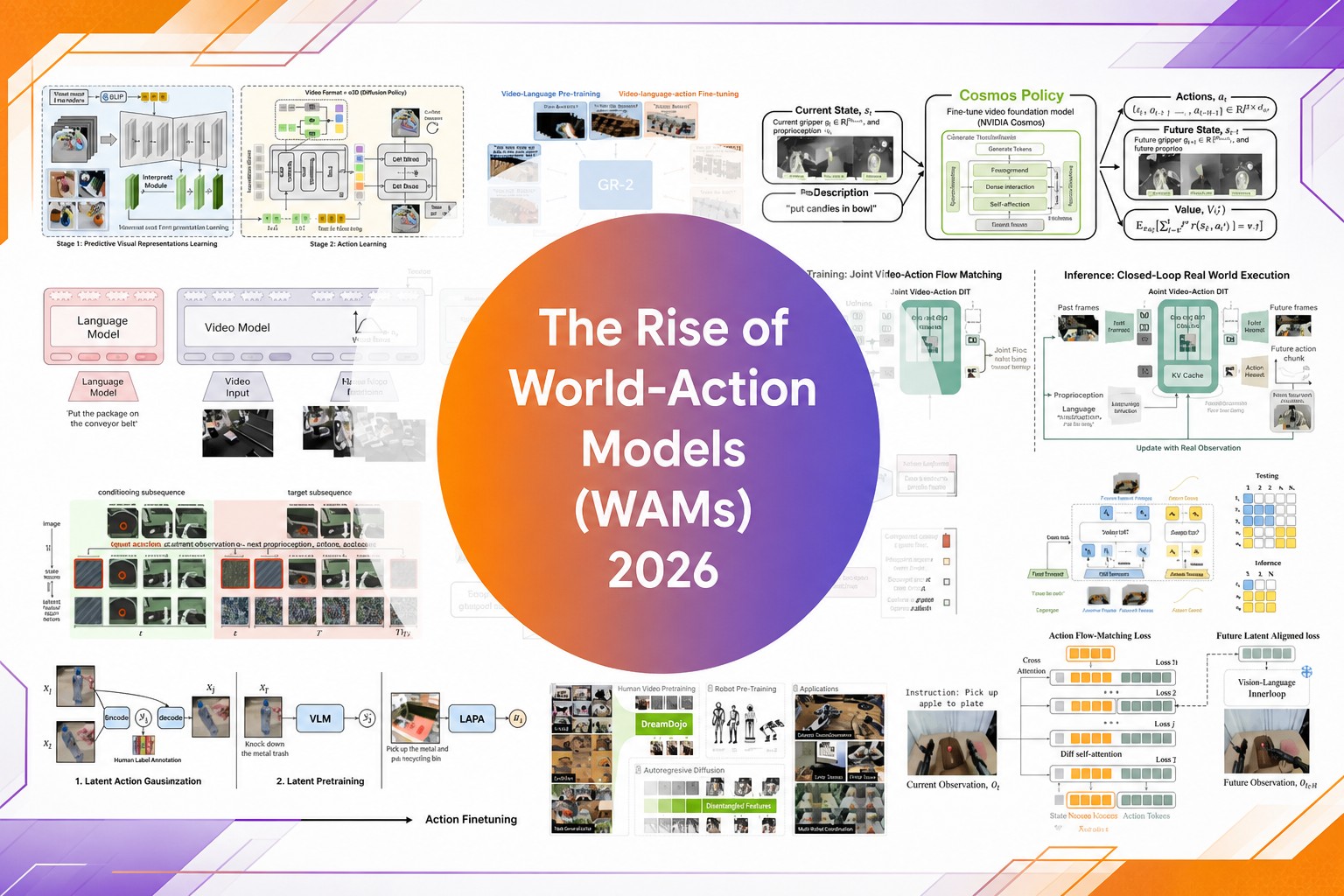

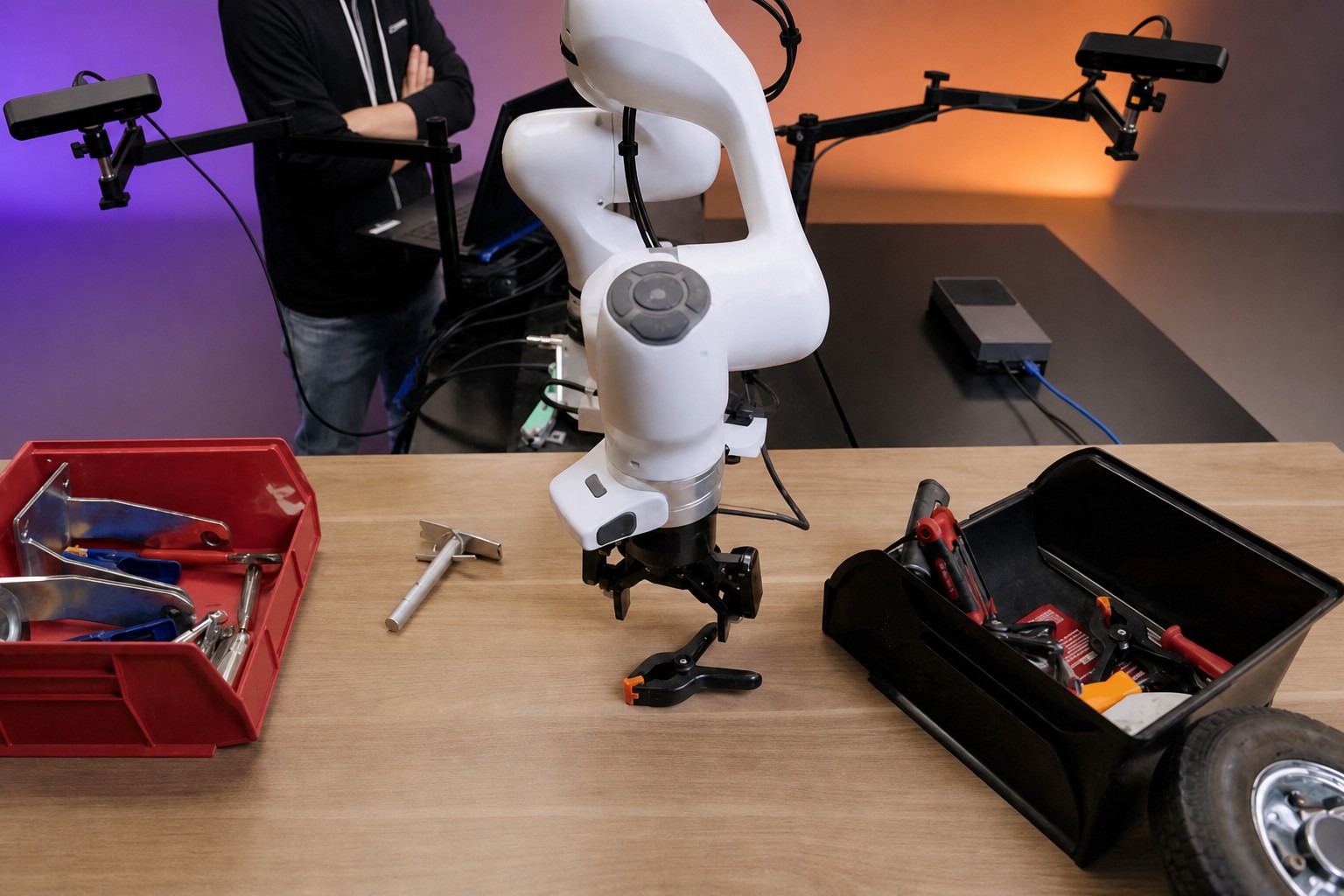
Video models become the second base for robot policies

A year ago the daily Scholar Inbox digest of robotics papers was almost entirely VLA — vision-language-action models built on a pretrained vision-language backbone. Now a second acronym turns up nearly every day: WAM, world-action models, which start from a pretrained video or world model instead and predict future states and robot actions together. In October 2025, in a piece called "The…

Runway's Solaris generates app interfaces instead of running them

Runway has introduced Solaris, a research system that generates a program's interface in real time instead of running one. A language model decides how the screen should change; a world model draws each new frame. Underneath there is no application — no layout, no components, no code. Solaris is built on Gen-4.5, Runway's video model, and continues the direction the company opened with GWM-1.…

Nvidia's Cosmos 3 Edge scores 22.9% and never leaves the robot

Nvidia has published a recipe for turning Cosmos 3 Edge, a 4-billion-parameter world model, into a robot manipulation policy that runs entirely on a Jetson Thor with no server GPU in the loop. In closed-loop testing on the RoboLab benchmark, the post-trained policy completes 22.9% of tasks. Nvidia's own larger Cosmos 3 Nano reaches 36.8% on the same benchmark. The company is shipping the…

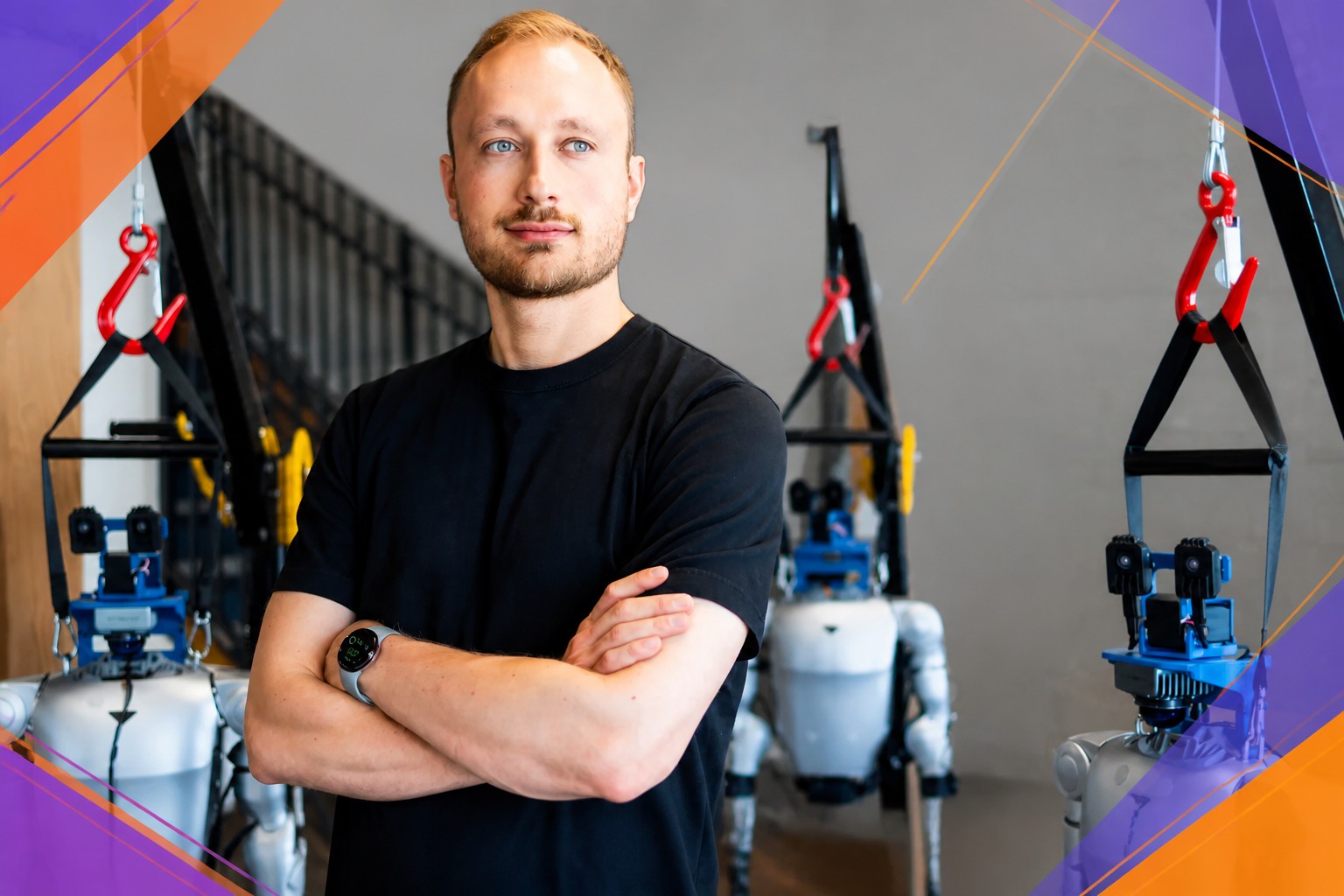
Hafner left DeepMind to put world models inside Chinese humanoids

Hafner, 31, has left Google DeepMind and started a robotics company whose name is not yet on the door. The office in San Francisco's SoMa district is close to empty: one employee on the day of a visit, almost no furniture. The exception runs down the middle of the room, where humanoid robots of different shapes and sizes hang from racks like marionettes. The robots are shipped in from China.…

Many systems called world models stop at one-step prediction

Generative AI comes with a convenient illusion of competence: the model writes, draws, sometimes even "plans," and it looks as though there is something like a picture of the world inside it. But the moment a system is asked not to continue text but to act toward a goal over a long horizon — drive a robot, navigate websites, negotiate with…

Generating 4D scenes as simulator code drops physics failures to 10%

Generative models have learned to produce striking clips, but that kind of video has a weak spot: nothing forces it to obey physics. An object can drift in mid-air, particles can ignore gravity, rigid bodies can pass through each other. For spatial intelligence that is not enough. What you need is a world model that doesn't just look plausible but behaves plausibly, because a simulation is…

Injecting world knowledge into tasks does not make a world model

Over the past couple of years it has become fashionable to talk about world models: systems that do not merely continue text or fill in the next frames, but understand at least a little of how reality is put together and how it changes over time. The authors of Research on World Models Is Not Merely Injecting World Knowledge into Specific Tasks…

LingBot-World: an open-source world model you can steer in real time

Not long ago, models learned to generate video from text with a few seconds of coherent motion. But ask one of those systems to walk forward, look back and return to a familiar object, and the magic stops. Objects trade places, details drift, and causal logic gives way to statistical coincidence. That gap between a nice-looking picture and an actual simulation of a world is what the authors…

VLWM predicts the future in language instead of pixels

When we ask a machine to help us cook dinner or swap a SIM card, it has to do more than recognize the objects in frame — it has to picture how the world will change from one step to the next. Most systems today see pixels and answer in short phrases, and long-horizon planning still does not work. The VLWM (Vision Language World Model) team proposes a different route: describe the future in…

Matrix-Game 2.0 generates interactive video at 25 FPS on a single H100

Interactive world models are a way to teach AI to sense the world rather than only describe it in words. Until recently, three obstacles stood in the way: there was not enough quality data with precise action labels; classic video diffusion models were too slow to compute and "forgot" the start of the clip; and errors compounded from frame to frame. Matrix-Game 2.0 offers a clear, practical…